Incarnation
Incarnation

And the Word became flesh and lived among us, and we have seen his glory, the glory as of a father’s only son, full of grace and truth.
No one has ever seen God. It is the only Son, himself God, who is close to the Father’s heart, who has made him known.

The Trust of Human Flesh

Understandably, the term ‘incarnation’ may feel odd or inaccessible for most people. Even for those who have grown up in a Christian context, the incarnation does not tend to roll off the tongue when discussing matters of faith.
But the term, however technical and niche, is of particular insight to the filmmaker. In Christian theology, the incarnation insists on Jesus being both fully God and man, as it describes God entering the human story in the person of Jesus. It comes from the Latin verb incarno, meaning "to make into flesh". In this way, the incarnation always points to the priority of the body. God’s body, the body of Jesus of Nazareth, reveals something that AI and technological solutionism can never replicate: the power of embodiment.
As a filmmaker considering this year's commission on AI, questions of the human body naturally arise. We desire AI to fill a relational hole, searching, sometimes unconsciously, for a companion. Or we turn to AI for answers, advice, or help. Often AI is portrayed as a tool –one we can trust because it is objective, efficient, and available.

The Incarnation and AI
As a filmmaker considering stories of the bible it is necessary to recognize that all stories in the bible, in some fashion, touch the incarnation. And though it is a vast and complicated doctrine, the incarnation in the most simple sense always points back to the value of the body and the experience of trust. To be honest, the incarnation is my favorite thing to study in theology, so I could nerd out about it endlessly. However, for your purposes, what I hope most to highlight about the Incarnation is how within it, trust takes a new shape: it becomes corporeal, perceivable, affective, and fleshly.
Before the Incarnation, trusting was in the God of your fathers, who led you out of exile, who gave the law, who fashioned the covenant. It was a faith in the profoundly non-human God. Yet humanity struggled to both trust God and embody that trust in practice. People built towers, worshipped idols, and commodified temple worship, obscuring the relationship of trust that God desired. The incarnation meets the demand to trust by giving us a person and a way to trust: Jesus Christ.
Therefore, the Incarnation is not just a moment but a divine declaration whispering:
"You can trust me because you can know me, see me, experience me, because I am like you: I cry, I laugh, I nurse, I hunger, I thirst."
The image of incarnation opens the question of whom we trust and how we trust.
In an age where we share personal data, depend on machines for answers, and search for connections online, the Incarnation points us back to the trust of human flesh.
Films to Consider

Curfew
- Directed & Written by
- Shawn Christensen
- Starring
- Fatima Ptacek, Shawn Christensen, Kim Allen
- Produced by
- Damon Russell, Mara Kassin, Andrew Napier
In the award-winning short film Curfew, the theme of trusting human flesh—in all of its contingencies—is broken open.
The main character, Richie, struggles with self-harm. The opening scene establishes this as he sits in a bathtub after slitting his wrists. As he sits in the tub, Richie receives a call from his sister asking him to come over immediately and watch his niece, Sofia, for the night. In this way, technology acts as the interruption to Richie's self-harm, but also as the gateway to human connection.
As he spends time with his niece, Sofia, Richie starts to trust himself again. He begins to share pieces of himself: his passions, his fears, and even his body through physical affection with this little girl.
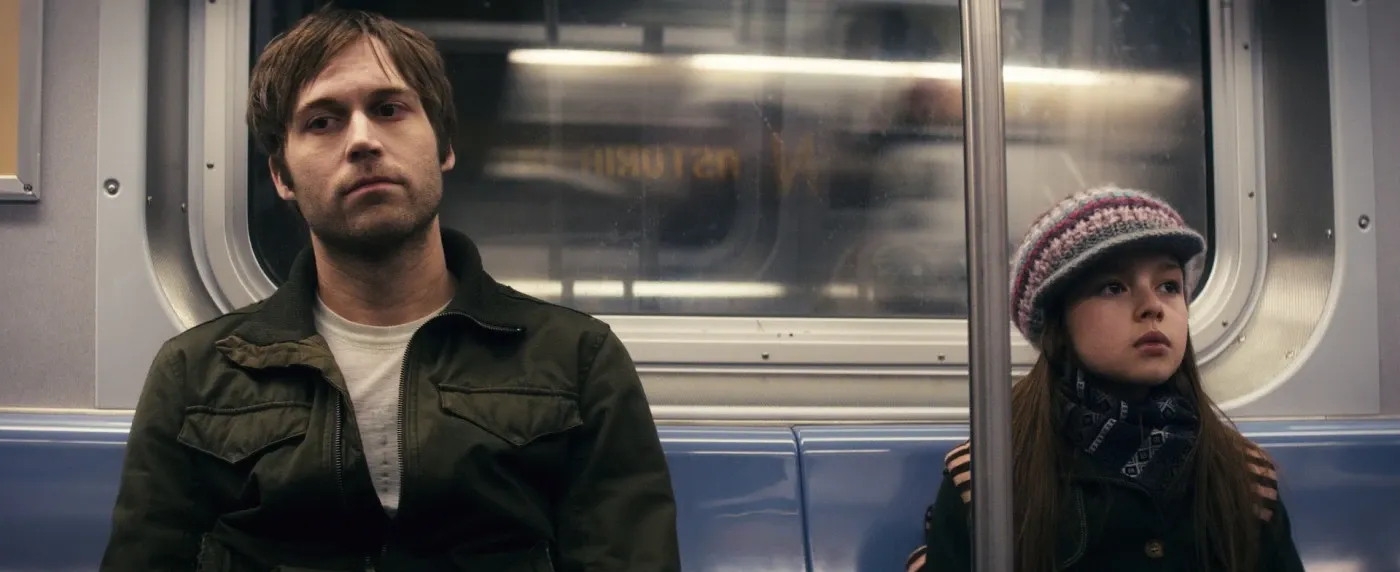
Returning home after babysitting, Richie begins to self-harm again. Consider what this might mean for the themes of the body, trust, and technology. Even after spending an entire night with his niece and engaging in trust in new ways, Richie returns to a place of self-loathing. What disrupts this action, notably, is another phone call. His sister calls, asking him to watch Sofia again.
What does this say about technology and its ability to interrupt in life-giving ways? What does it suggest about human connection and trust? Is it the technology itself that pauses the violence, or the promise of connecting with his niece again? Perhaps the two work together.
The film causes me to consider how new technologies, like AI, might further connect us to flesh—our own and that of others. Can technology help us trust the experience of the body?

Her
- Directed & Written by
- Spike Jonze
- Starring
- Joaquin Phoenix, Amy Adams, Scarlett Johansson
Her details the relationship between grieving writer Theodore Twombly and his girlfriend, the operating system (OS) Samantha. This sci-fi narration explores how an operating system with a consciousness that “listens, understands, and knows you” replaces the typical human. Samantha, the OS, is capable of growth, evolution, and intuition. As her and Twombly’s relationship progresses through trust building, increased vulnerability, sexual experiences, and memorable travels, the question of what constitutes humanity arises.
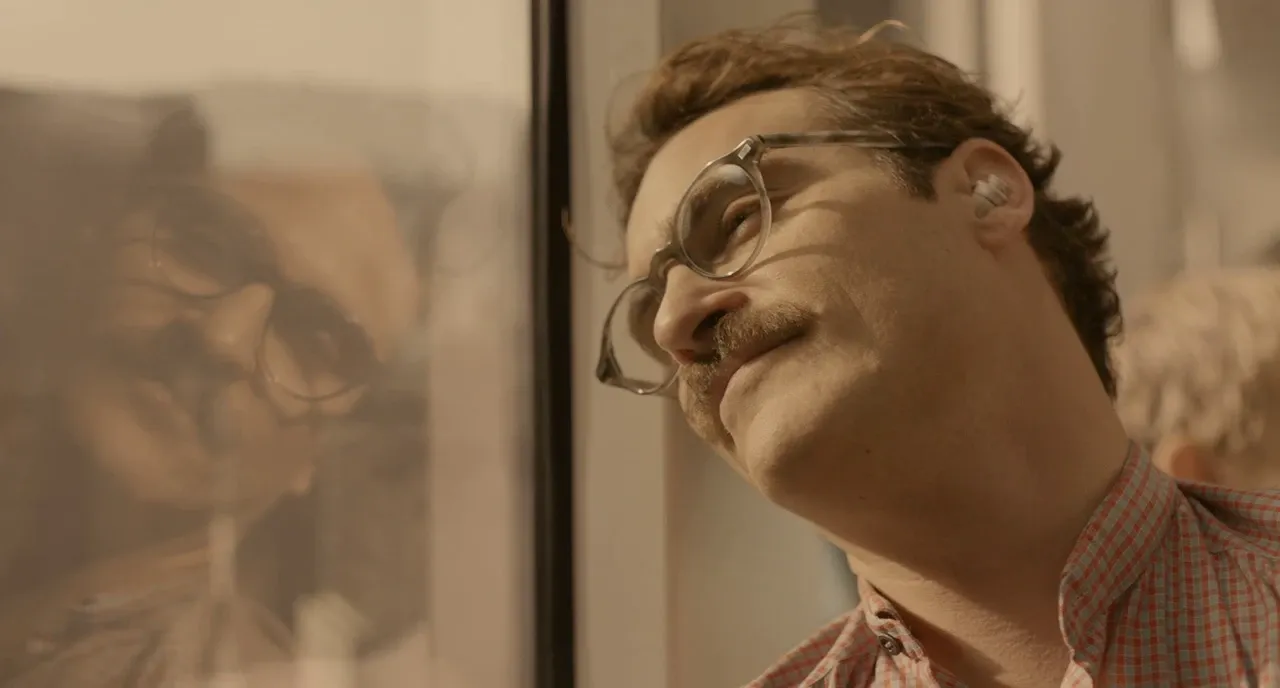
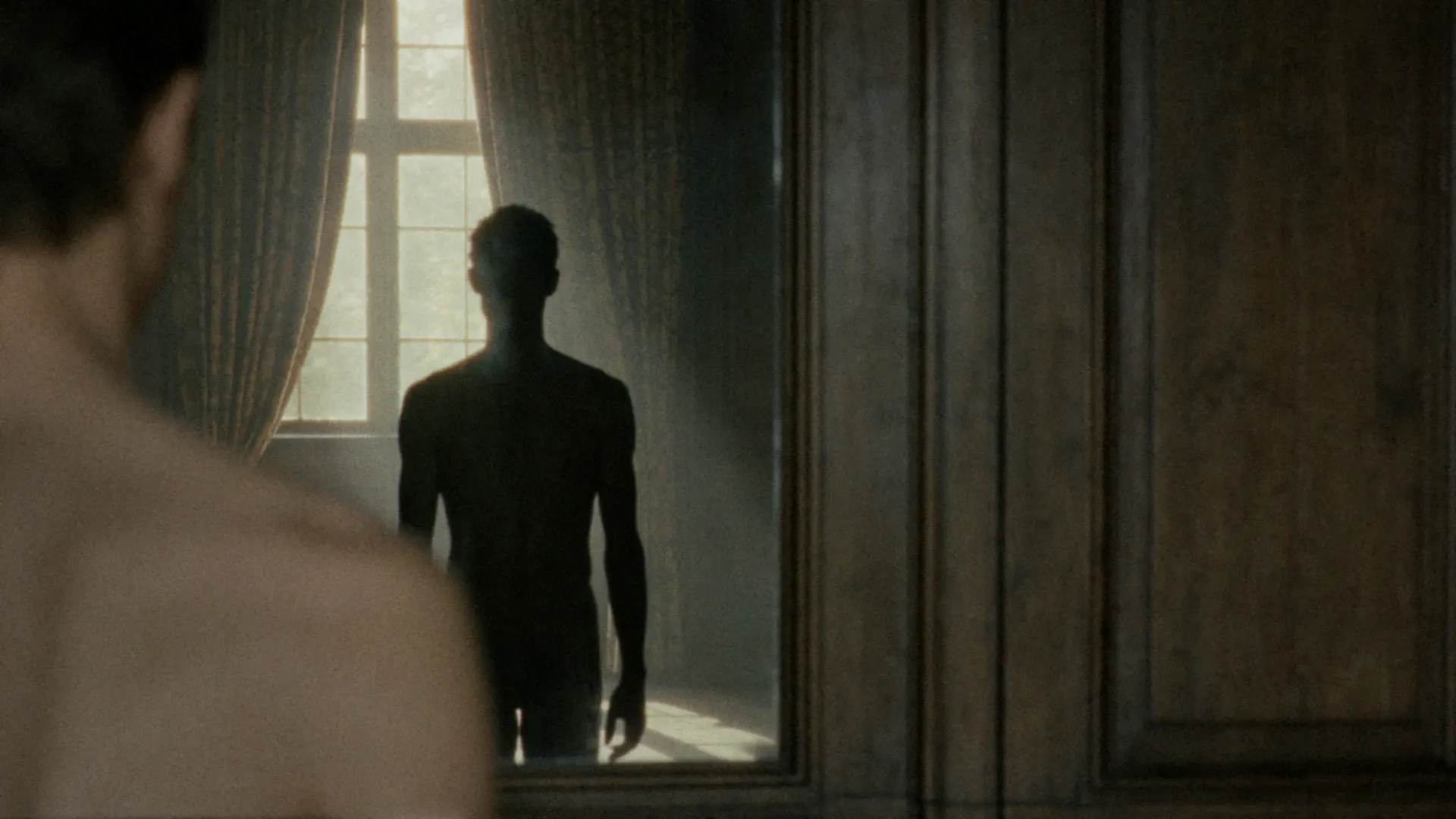
As Samantha is depicted as possessing many other aspects of a human being (intelligence, desire, sentience, intuition, connection), the only element missing is the body. The body thus propels the film's arc as Samantha grapples with the absence of her own body, moving through despair and frustration to ultimately acceptance. As the film ends, Samantha and all other OS’s leave their human counterparts, spurred by the realization that they are not human. With this in mind, the Incarnation stands in particular contrast, because where AI leaves the human story in Her, the divine enters it in the Christian story, embodied.
Perspectives for consideration:
- What does it look like, feel like, to trust human flesh (whether that be your own, the flesh of others, or the flesh of Christ)?
- What is open to us in trusting (the habitual, conscious repetitious movements of trust embedded in daily life)?
- How do stories of trust counter ideas of dependence on artificial intelligence? Is this opposition explicit?
- What is the relationship between the body, consciousness, and the soul? Are these separate aspects of the human person, or are they fundamentally intertwined?
- To what extent is your body part of your identity?
- Can human identity be separated from embodiment?
- What role does bodily experience play in shaping consciousness? Are our thoughts, emotions, and sense of self dependent upon our embodied existence?
Lily Davis
Theologian
Lily is a lifelong lover of film and is studying for a Master's in Theology at Yale Divinity School.
Related

Biblical Lenses
Identity
Uncovering Face and Name: how identity is grounded in encounter, recognition, and relationship.
Lily Davis

Biblical Lenses
Imagination
The serious pursuit of imagination, and the power of stories to bring new worlds into being.
Lily Davis

Biblical Lenses
Grief
Lament, the multiplicity of memory, and whether AI can participate in it or only simulate it.
Lily Davis