Imagination

Imagination


Then I saw a new heaven and a new earth; for the first heaven and the first earth had passed away, and the sea was no more. And I saw the holy city, the new Jerusalem, coming down out of heaven from God, prepared as a bride adorned for her husband.
And I heard a loud voice from the throne saying, “See, the home of God is among mortals. He will dwell with them as their God; they will be his peoples, and God himself will be with them and be their God; he will wipe every tear from their eyes. Death will be no more; mourning and crying and pain will be no more, for the first things have passed away.”

Imagination, Revelation, and Another World
Of all the phrases you will hear around The Pitch, perhaps none appears more often than biblical imagination. It is woven into the DNA of the films we hope to commission and the stories we hope filmmakers will tell. Yet the phrase is surprisingly ambiguous. What exactly is biblical imagination? What distinguishes it from imagination more broadly? And why has it become such an important part of Christian storytelling?
When thinking about imagination, we might consider it as something juvenile, fantastical, and fictional. I mean, when is the last time someone has asked you to imagine?
Unlike the way imagination is typically designated as foolish and only for children, in the Bible imagination is a serious practice.
The audience that the Bible was originally written to used imagination as a tool. For them, imagination was a way to inhabit worlds they had never seen. It was an act of resistance against the oppression they faced in their current world. It was a way to hope for better and to refuse defeat.
I think this is best seen in the book of Revelation. This book narrates a vision received by John, speaking of heavenly experiences that culminate in an ultimate judgment and vision of the afterlife.
The vision communicates ideas and invites participation in an imagined world through rich and descriptive images: a fiery lake, a dragon, a spring of life. Though somewhat fantastical, these images are not merely decorative. They construct a framework in which truth becomes emotionally, visually, and morally intelligible. In my own study on Revelation, I became fascinated by how Revelation repeatedly teaches through contrast. The spring of the water of life is understood alongside the lake of fire. Life becomes imaginable because it is contrasted with death; hope is sharpened against judgment. Revelation is not abandoning reason but is expanding it through imagination. This is precisely what imagination does: rather than replacing reality, it gives us a way of inhabiting reality differently.
Modern biblical scholarship increasingly recognizes imagination as an important interpretive practice. Imagination is not the invention of whatever we wish the text to say. Rather, it allows us to inhabit the historical, cultural, and emotional world of Scripture. This matters enormously for filmmakers because no adaptation begins with a camera but with entering the world of the text.
Before deciding how to readapt a Biblical story, the filmmaker must first imagine what those moments felt like. What did people smell? What frightened them? What silences existed between the verses?
Perhaps this is why C. S. Lewis remains so influential for both theology and literature. Lewis understood that imagination often prepares us to receive truths long before argument convinces us of them. Whether through Narnia, The Great Divorce, or his apologetic writings, Lewis recognized that stories train our imaginations to desire certain kinds of worlds before we are capable of defending them intellectually.
Film operates similarly, allowing us not simply to observe another world but to be in it. The question, then, is never whether your story imagines. The question is what kind of world your story teaches us to imagine. Does it imagine love as disposable? Does it imagine death as the final horizon? Or does it dare, like Revelation, to imagine that another world is possible?
Biblical imagination is not about making explicitly Christian films. It is about allowing Scripture to enlarge the horizons of what we believe humanity, justice, beauty, hope, and redemption can look like. The author of Revelation, John, imagined a new creation because his world desperately needed one. Perhaps ours does too. As a filmmaker, you can be the one to imagine it.
Films to Consider
The Tree of Life
- Written and directed by
- Terrence Malick
- Starring
- Brad Pitt, Sean Penn, Jessica Chastain
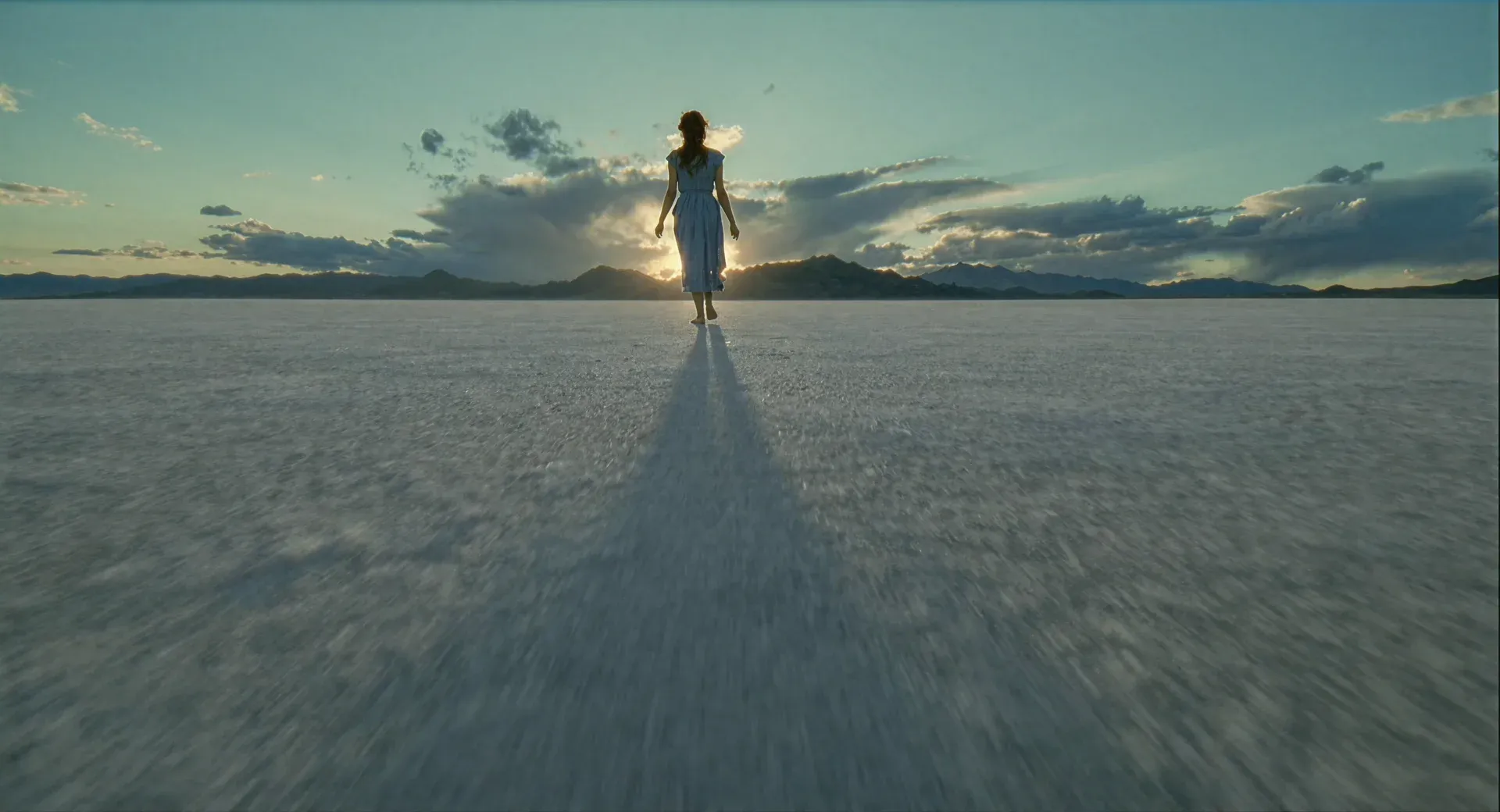
Terrence Malick’s The Tree of Life is perhaps one of the most ambitious cinematic attempts to grapple with imagination as it imagines the relationship between creation, suffering, memory, and eternity. The film follows Jack O’Brien as he reflects on the death of his younger brother and his childhood in 1950s Texas.
Yet the film frequently departs from this intimate family narrative. In one of its most striking sequences, Malick interrupts the story entirely, depicting the creation of the universe: Galaxies form, oceans emerge, dinosaurs wander the earth. What begins as a story about grief suddenly becomes a story about everything. At first glance, the movement feels disorienting. What does the death of one young boy have to do with the birth of stars?
Yet this is precisely the imaginative move the film asks the audience to make. Like Revelation, The Tree of Life refuses to explain suffering through straightforward answers. Instead, it expands the imaginative horizon through which suffering is viewed. The grief of one family is situated within the vastness of creation itself. The film continually oscillates between the particular and the cosmic, asking whether individual pain can be understood within a larger story. This imaginative movement bears a resemblance to Revelation’s own strategy.
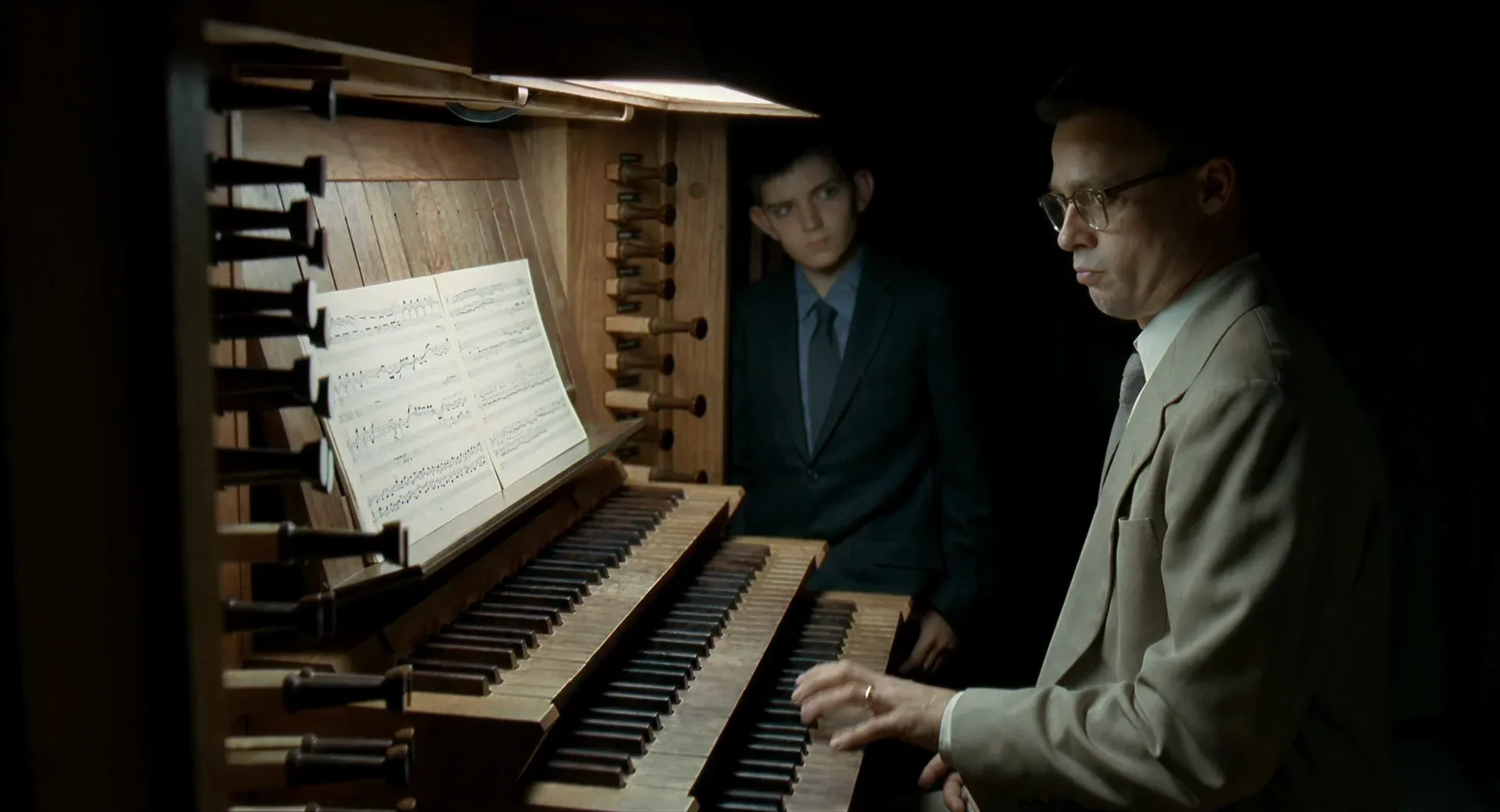
Revelation does not answer the suffering of its audience by offering a logical explanation for Roman oppression, persecution, or death. Instead, it enlarges the frame. John invites his audience into visions of heavenly worship, cosmic conflict, final judgment, and a renewed creation. The point is not escape from reality but the reimagining of reality itself. Near the end of The Tree of Life, Jack finds himself on a mysterious shoreline where the living and the dead meet. The scene is neither presented as memory nor heaven nor dream. It exists somewhere between all three. Malick does not explain; it is only an image. Yet the image possesses an emotional truth that many viewers immediately recognize. Why does Malick choose images instead of answers? What happens when filmmakers trust viewers to inhabit mystery rather than solve it?


Starting Points/ Different Perspectives for consideration:
- Can mystery survive adaptation?
- If Revelation teaches through images rather than propositions, what images carry the deepest truth in your own story?
- What is lost when biblical symbols become overly literal?
- Does your imagination merely reproduce the present world, or does it challenge your audience to desire another one?
Lily Davis
Theologian
Lily is a lifelong lover of film and is studying for a Master's in Theology at Yale Divinity School.
Related

Biblical Lenses
Identity
Uncovering Face and Name: how identity is grounded in encounter, recognition, and relationship.
Lily Davis
Biblical Lenses
Grief
Lament, the multiplicity of memory, and whether AI can participate in it or only simulate it.
Lily Davis
Biblical Lenses
Neighbour
Who is my neighbour? The Good Samaritan, the curated logic of technology, and the neighbour as given.
Lily Davis